🖐🏽 the five
This week's explorations include celebrating Pi Day, navigating risk, and font fun.

As a reminder, I’m moving my questions and explorations over to the new ✨ beautiful chaos✨, as a way to more intimately explore the real question of our times - what does it mean to live a more human life in an age of machines?
If these are questions you also find yourself asking, especially as a parent or a neighbor or a friend, then I hope you’ll join me 📍here.
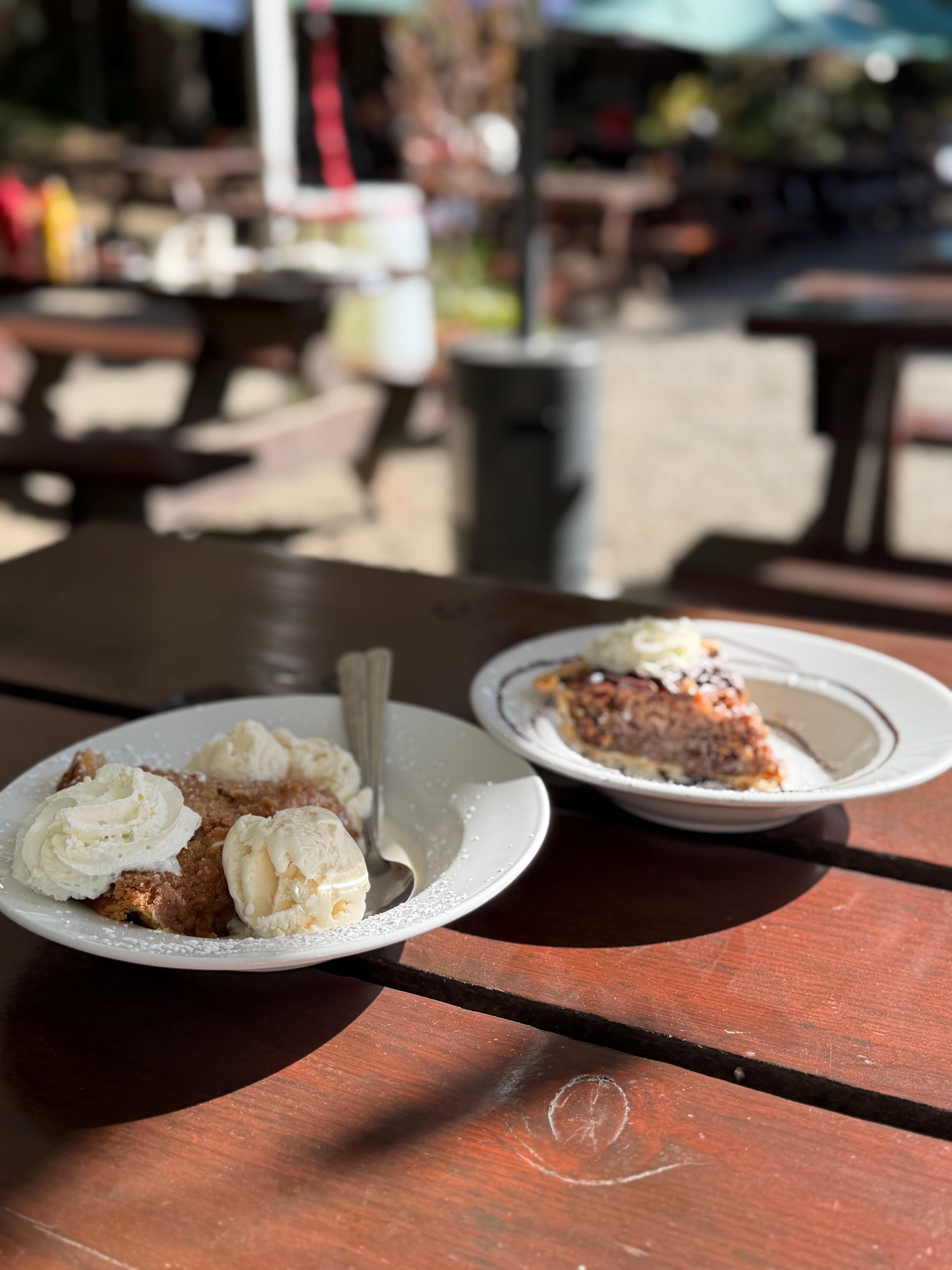
The π song: As an unabashed science nerd, I feel duty bound to continue the tradition with our kids. So yesterday on π day (3.14), we not only headed to Alice’s to grab pie for breakfast, we listened to this gem that our youngest’s math teacher shared with the class.
We now know π to 10 decimals thanks to this little ditty, a feat I just know you’re eager to share.

The Worst Advice Parents Can Give First-Year Students. Every week I’m asked what I think my kids should be learning and be focused on. And every week I say something to the effect of:
a) learn as many mental models as possible so they can speak the language of many disciplines - my favs are Physics, Philosophy and Poetry. Study those poles and you’ll be comfortable exploring anything that lies in between. But it’s just shorthand for: study as many disparate things as possible - Comp Sci and Classics, Economics and English, History and Math.
b) maximize slope - in any given choice, choose the thing that has the steepest learning curve in a given period of time. That could be in a big company that invests in young talent vs. a start-up with weak leadership. But the point in any situation is to invest in the thing that allows you to learn the most.
c) get good at navigating risk - as a serial founder, people assume that I like risk. It’s actually the opposite. I hate risk so much that I’ve just gotten really good at identifying it and working around it. It’s a skill that has allowed me to leap into really disparate things, knowing I can build myself a safety net. And the only thing I’m certain about the future is that very few decisions are going to sustain us for the long run. When I started at P&G I knew so many “company men” - people who had started their careers there and expected to retire there. Over past 20 years that model as already gone by the wayside and it’s only going to get worse.
But I think we focus too much on the idea of “opportunity” and what things we should chase.
Instead, what we forget is that on the other side of the opportunity coin lies risk. And our kids are going to need to develop a different relationship to risk than we had to.
This article does a fantastic job of making a deeper case on point #3.
When parents send their children off to college, they need to encourage them not to focus on narrow careers but to acquire the sort of all-purpose intellectual skills that allowed Franklin to thrive: the ability to ask deep questions and wrestle with big issues like human equality, the limits of individual freedom, and justice. Students need to learn how to reason critically; to distinguish bad, baseless ideas from deep and eternal insights; to justify their views; and to express those views lucidly enough for others to grasp. These skills have proved essential for thousands of years and will never become obsolete.
🍳 It’s always the kitchen - I’m sure anyone who has every hosted a party can attest to - no matter how well you lay out the food and the drinks in other highly rational places, everyone congregates, happily squished together, in the kitchen. Loved coming across the results of this study that corroborated this.


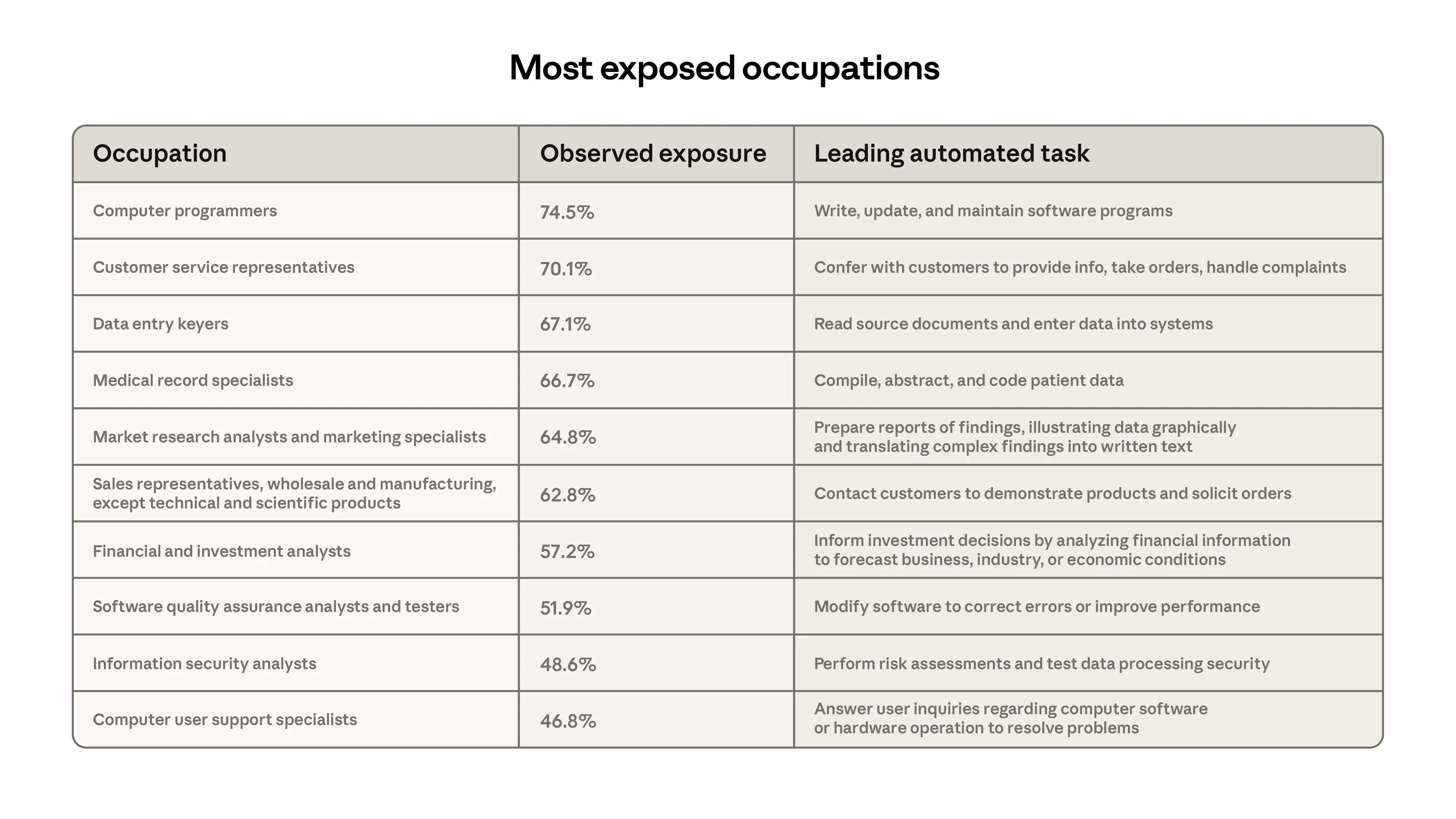
💪🏽 Labor Market Impacts report - this report came out last week and is a good one to dig into, to start getting an intuitive sense of where labor market impacts due to AI will be coming from and where the exposure (risk!) is.
creates a new measurement of “AI displacement risk” called observed exposure
it combines theoretical LLM capability and real-world usage data
weights automated (vs. augmented) and work-related uses more heavily
combines data from O*NET (database that lists tasks associated with ~800 US occupations), Anthropic usage data and something called “task-level exposure” from a paper by Eloundou et al. (2023) that measures whether it’s possible for an LLM to make a task at least twice as fast
a job’s exposure is higher if:
its tasks are theoretically possible with AI
its tasks see a lot of usage in the Anthropic Economic Index
its tasks are performed in work-related contexts
it has a relatively higher share of automated use or API implementation
its AI-impacted tasks make up a larger share of the overall role
I’ve shared a couple of the main results charts but it’s relatively short and worthy of reading through the whole thing - not just the findings (eg. what occupations face the most risk) but why. What makes them susceptible to be being done by AI.
✒️ Create your own font: I haven’t yet tried this, but as a font nerd who also has a font nerd daughter, I think this is such a fun project to try (and like most things AI, there are practical notes in the comments of this thread to make the prompt/results more precise).


😁 Just fun. Each week I’ll collect a bunch of things from the internets that I’ll bookmark and share with my daughters. This one was one of their favs last week. Just really clever and fun.