
👋🏽 hello/goodbye.
Today we say goodbye to Milo, and hello to the next chapter.


I. live in the future and build what’s missing.
For nearly 300 Sundays, I have sat down at this computer to design experiments and build products to solve the invisible load of running a modern family (and perhaps more precisely and selfishly, to solve for the the labor of women in this critical work that has big implications in mid-career burnout breaks, relationship stress and persistent overwhelm).
It’s a problem space that is notoriously hard to define exactly, but one that gets violent nods of understanding by fellow parents. It’s messy, it’s complex, it’s just plain gnarly.
But if you’re going to build the future you want to live in, I can’t imagine a better space to want to devote my hours to.
Incredible frustration, incredible data, incredible opportunity.
II. a new chapter.
Today, I say goodbye to Milo, and hello to the next chapter.
After 6 years of building and learning and iterating, the ultimate lessons:
if we don’t solve the invisible load, particularly for women, having kids is going to keep looking like a shitty deal and we’re going to continue to see worse outcomes for families and society overall
technology absolutely has a role to play, just not the one we’ve been having it do - we don’t want/need machines that allow us to do more in less time (the yoke of workplaces) but rather machines that make space for us to be better at humaning, which is rooted in being (a nifty clue: we’re not called human doings).
AI is critical to that role, just not the nascent sophistication of the pattern machines we have today, trained on the data of our public internet (which poorly represents the insights of women and inadequately captures the tacit knowledge of the work of care - this includes spaces like education and healthcare and relationships and coaching and…)
just as we had business model innovations with the rise of digital and mobile, we need business model (especially pricing) innovations for our AI era - new ways of creating value yes, but also new ways to extract that value fairly, sustainably and transparently.
we can’t use the default playbook of convenience, built for our workplaces where productivity is the goal. We need to invent a playbook around care, where thriving and connection is the goal - trained from the beginning, not on answers and speed, but on the messy, friction-filled matter of struggle and process.
And it is only through that hard gain wisdom of building that I can say: we’re still too early.
Too early to build the kind of AI that reliably, delightfully, powerfully lightens the load without adding it back somewhere else.
So, as frustrating as it is to know that it’s possible, just not yet, it’s time to turn the page to the next chapter.
It’s hard. Excruciatingly so. As a founder I have poured my heart and energy and everything into solving this on behalf of so many families, and especially women. But a good founder understands timing.
And the time is not yet, to the kind of AI that will transform our family lives not with convenience, but with care.
It’s been the ride and experience of a lifetime - being one of the first teams in the world to start building a consumer product on GPT 3.5, months before ChatGPT was unleashed on the world. When being in the OAI offices still felt small and quaint. Then all of the months afterward, just trying to surf a tsunami. All of the intuition and first-principling and inventing.
I am endlessly grateful for the experience. But as a scientist I know I still have work to do - to process and share the learnings of these years. I want to sift through the mountains of insights and intuition that I’ve collected - over the past 3 years of building with AI, the past 6 of deeply understanding how modern families work and where the pressure points lie, and the past 10 years of trying to figure out how we build the kind of modern village that parents deserve.
Because I believe, even more today, with the confidence of hard earned intuition and insight, in the promise of machines that make everyday parenthood lighter and more connected, than I did a decade ago with the power of blind optimism.
III. 🏔️ a little journey through the idea maze.
When you’re inventing something that has never existed before, the most important thing to know is that there is no map. Certainly not one that speaks of the terrain. No playbook, no advice, no experts to rely on as crutches.
Instead, it’s my job to map the terrain with quick little experiments. Speed is of the essence because where there is great uncertainty, action is information. Building, testing and iterating with well-defined hypotheses in a weekly cadence allows you to cover the most ground, most effectively.
We began by mapping the terrain with little product tests, putting software to work with experiments like:
a Slack for families
a digital whiteboard organized by key info
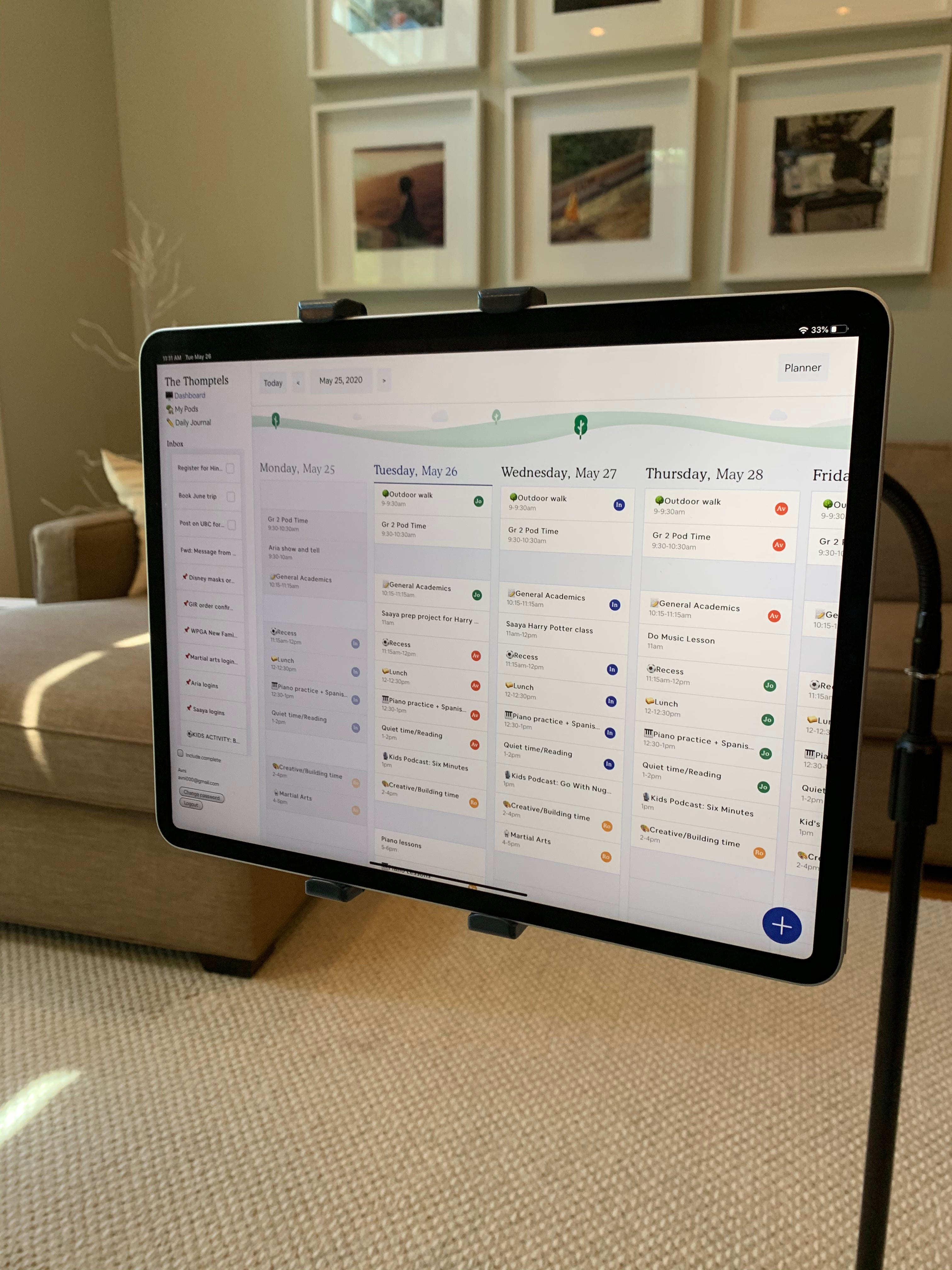
a shared calendar/to-do list with a kitchen screen
a triage center for the firehose of info
a shared school alerts system
a Fairplay integration of card assignments and weekly tasks
a “wisdom of the village” source of suggestions
an SMS sidekick that served up adventures


With each iteration, we’d solve for more of the terrain and more pieces of the puzzle - understanding that the invisible load was actually 4 distinct jobs or that a kitchen screen showing everything only mattered if you also solved for whose labour got all that info on there in the first place.
Ultimately, we realized that there were two core parts of solving this problem: getting everything into one central place was just one half of the challenge.
The other half was: the labor of the central person who turned that information into useful action. How to solve for the work of processing and managing and coordinating all of that information? No matter what we tried, with software or with human assistants, that half kept eluding a solution. There just wasn’t a good enough substitute for what was currently being used for the job: a mother’s brain.
By the summer of 2022, we had tried everything. And I thought, maybe it just isn’t possible.
And then, like a cosmic white knight, the LLMs came flying in - GPT 3.5 in particular:
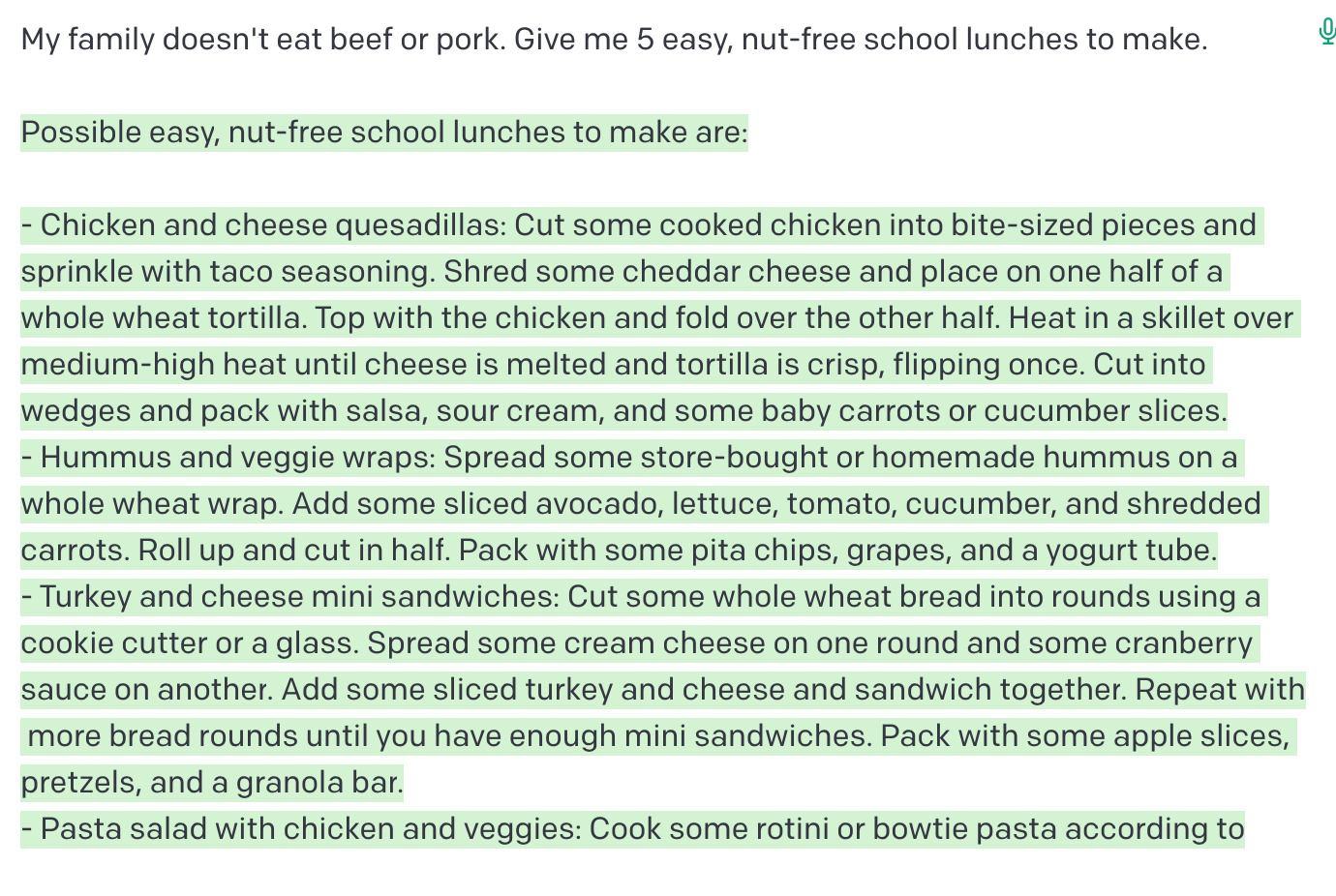
And it felt like that missing puzzle piece came into view. Now, in addition to the rule-based software that could handle the data, it looked like we had something that could handle the messy, ambiguous parts of the work.
Incredibly, because we had been looking for exactly this puzzle piece and because I’d known the OpenAI team since they started back in 2016 when I did YC the first time, we were able to start working with the incredible OpenAI researchers before ChatGPT launched, to not only understand what was possible but how it could be practically harnessed.
And as much as the nerd in me loved learning the technical ins and outs, the pragmatist just wanted to solve this problem.
For the past 3 years, it’s been the wildest ride of learning and testing and building - all on quicksand that threatens you suck you in and and spit you out, as the entire market changes every 6-8 weeks. That pace of innovation and change is like nothing I’ve ever seen and likely ever will again.
IV. 🪨 stepping stones to nowhere.
Start-ups are an exercise in baby steps up an insane mountain with no clear ascent. Little stepping stones that you place in front of you and test to see if it’s the right one - both in direction and type but if it’s also technically able to bear the weight of user needs and expectations.
When I was building with just software, that last bit was never really a concern - it was mainly can you build something that people need and are willing pay for and solves the problem sustainably.
But now I had to worry about that stone sinking into the murk because while these models are incredible, there’s still a ton of product infrastructure that needs to be built before that raw potential can be applied to solving real world problems.
Over and over we had to simplify - because the full vision of a Family AI that could do a wide range of things in beautiful simple natural language just wasn’t possible beyond little toys and demos.
Finally we found stable bedrock. A core thing that helped enough that people were willing to pay for and eventually couldn’t live without. A core thing that gave an entry point to the rest.
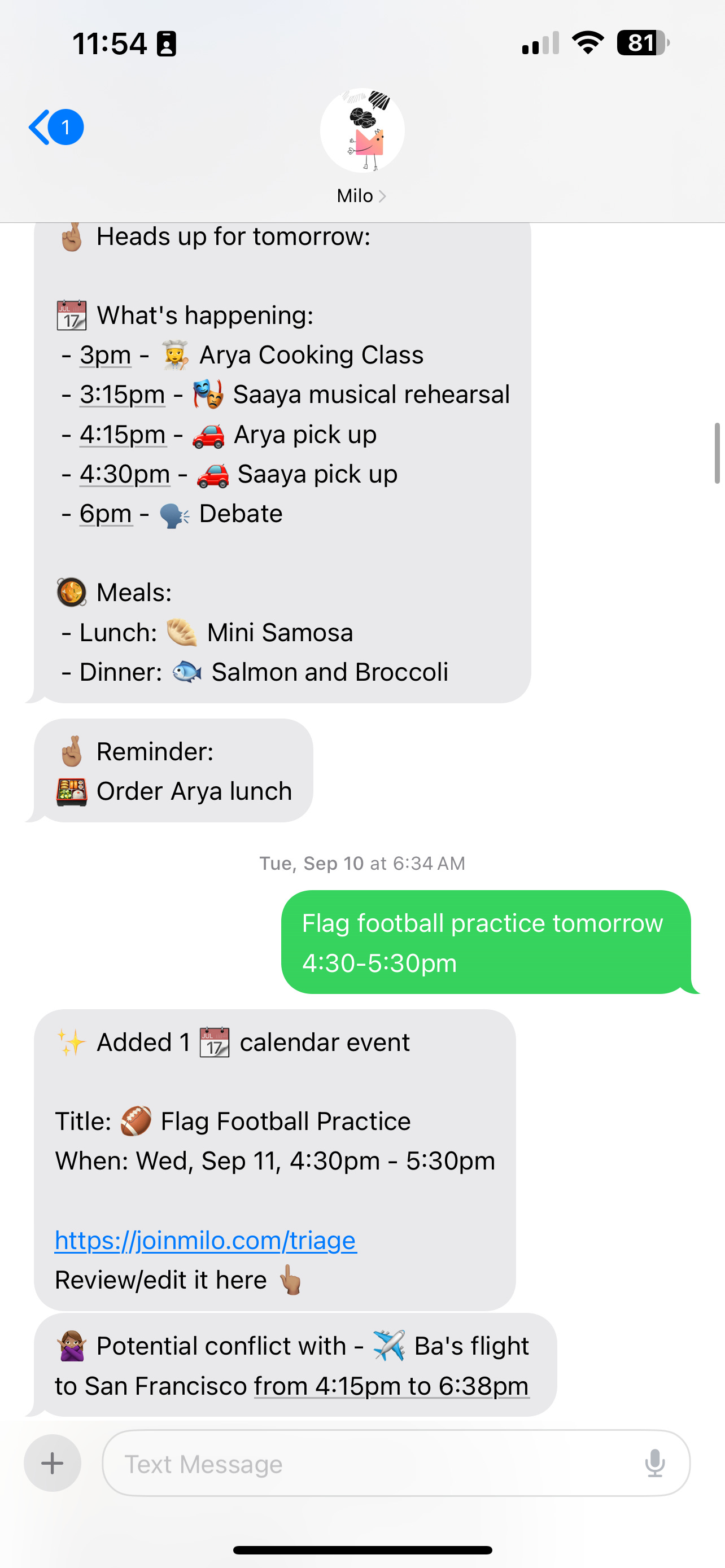
Elated, we thought, finally. We can build from here.
Little did we know that while this stepping stone was good, every other one from there just wasn’t ready. The technology is simply too early to be reliable in any useful way. We’ve prompted and few-shot and fine-tuned and trained our way through every possible path with promising demos but disappointing production and scale.
So we’ve tread water for 18 months, which has made clear the choice: start building the foundation for the next stones ourselves by investing in our own models and infrastructure, or stop and wait.
There’s never a right answer in start-ups. But given everything I know and the kinds of things I’ve good at, we’re choosing the latter.
Because too early is still wrong. And there is much work to still be done.
V. 🖐🏽 the five.
There’s been little time to reflect on all that we’ve learned - just the constant march to get to something useful and reliable and delightful. So I’m excited to spend the next while processing and sharing.
To start, the 5 more important lessons I’ve learned, in summary form. I’ll delve into each in more detail in future pieces but for now:
👯♀️ We can’t buy village. We have to build it. I’ve been chasing village for a decade now, trying to build it explicitly with Poppy and trying to make it easier to manage with Milo. But truth is, we can’t buy our way to the kind of help and safety net we’re looking for. We’ve tried to unbundle village into tidy little components - childcare here and carpooling there. Outsourcing meal prep and errands and coaching… and instead of making things feel easier and more manageable, parents are more overwhelmed and stressed than ever. I can see now that there’s a different role of technology that will require more effort but will get to 2nd and 3rd order impacts that feel more aligned.
📲 The technology of the past decade has made the invisible load worse. It was surprising to me to discover that parenting in the past 10-15 years has become much more overwhelming, in part because of the way many tech products have been designed. The firehose of school/sports emails, scheduled everything, the tyranny of activity registration via shitty software, outsourcing apps like grocery delivery that might save 30 minutes in shopping but add that back in cognitive planning and tracking and managing… it’s not to say there aren’t benefits to these services, just that they’ve been built to solve for the 1/5 tip of the iceberg that is visible, without concern for the 4/5 lying under the surface. AI can really help but only if it also accounts for the full iceberg.
🙅♀️ The invisible load can’t be shared fully - someone has to run point. One of the hardest to swallow learnings: in an era of outsourcing and coordinating and juggling many helpers, more than the actual doing, someone has to be at the center to manage it all. That someone needs to see everything, have up to date data, and hold all of the context. While a partner or a caregiver can certainly handle parts, there simply needs to be some one person where everything flows up to. And this doesn’t need to have a gender - I really do think it can be a guy, a woman, or even a robot. But our societal perception and expectation of fairness, more than anything, makes effective solutions hard to find. I know we all don’t love that answer but we need to acknowledge it to be able to work with it. But it’s also why AI can be the answer. Because it can hold all of that info and scan for gaps and conflicts, all while serving each parent or caregiver equally. In everything I have seen, and built and learned, this is why I am so pro-AI. Because it’s pretty much the only way I think we solve this thing.
🧘🏻♀️ AI not for doing, but for being. The more we built, the more I realized we don’t need endless AI assistants to do more things in less time. This is the playbook of work. In our homes and our families and communities we actually just need to make space so we can do the (often hard) humaning things ourselves. So we need to reconsider what work it is that we’re trying to innovate away. The solution isn’t in AI the doing the human bits for us, it’s in making space by doing something much more subtle - by being the holders of our values and intentions and preferences and schedules and loyalty numbers.
💕 We need AI that is built for care, not convenience. Perhaps the most important point - it’s clear to me that we need a new playbook for building our technology so that we’re not building simply for convenience and consumption. These AIs that are being built will exist alongside our kids and our parents. They will witness our most vulnerable and most poignant moments. This is not simply about building a machine of doing that endlessly checks off tasks. It’s about building companions for being that enable us to live closer to the unfiltered messy.
So then the core question in my mind is: what will it look like to design collaborative AIs built for struggle and effort and connection - all requiring intentional friction? Designed not just to account for one individual’s preferences and needs but for a whole family.
VI. ✨ making intentional friction a north star.
It isn’t easy for me to say goodbye or turn the page to a new chapter.
Often people assume that I’m so focused on solving for the problems of families because I’m a woman and I have kids. That’s certainly the thing that keeps me motivated and connected to the problem. But I care about solving for families because I think we’re the proverbial canary in the coal mine for our society.
Parents are raising not only the next generation of workers and citizens, but form the foundation of our neighborhoods and schools and workforce. Solving problems for us mean solving the problems of a good majority of the world.
And I believe deeply in the promise of technology, especially AI, and the power of progress and innovation.
But having spent 10 years to get to the deepest understanding of our families and communities today and the bleeding edge of what’s happening in technology, I can tell you there’s lots to be concerned about because what serves one, is currently at cross purposes of the goals of the other.
So for now, the goal is to design and test and build with a different intention in mind - to collaborate and to design and to connect. To learn.
💕 A final note then: To the families we’ve served, the investors who have believed, to the team who tirelessly built - you have made this journey the privilege of a lifetime.
A bientôt and onwards. ✨
This reflection is an amazing gift to entrepreneurs walking down similar roads! I can’t wait to follow what you’re working on next.
I love the prospect of what Milo could achieve, and believe that the intuitive management of this 'invisible' work would be a true paradigm shift. I commend your efforts and can't even begin to imagine how the past 6 years has been for you and the team. Can't wait to see what the next chapter brings!